Social Media Policies for Texas Employers: What Is Acceptable, What Is Not, and Where NLRA and Title VII Rights Change the Rules

August 26, 2026
Quick Article Summary
- Texas employers can have social media policies that protect confidential information, prohibit harassment, prevent misuse of company accounts, and set expectations for employees who speak on behalf of the business.
- Employers must be careful not to write social media rules so broadly that employees could reasonably believe they are prohibited from discussing wages, schedules, safety concerns, management conduct, union activity, or other working conditions protected by the National Labor Relations Act.
- Social media posts may still justify discipline when they involve unlawful harassment, threats, disclosure of confidential information, impersonation of the company, maliciously false statements, or conduct that violates a lawful workplace policy.
Why Social Media Policies Matter for Employers
Social media has become part of everyday workplace life. Employees post about their jobs, coworkers, managers, customers, wages, schedules, discipline, workplace drama, politics, religion, safety concerns, and even terminations. Sometimes those posts are harmless. Sometimes they are embarrassing. Sometimes they are protected by law. Sometimes they create real business risk.
That is what makes social media policies difficult. Employers have a legitimate interest in protecting the company’s reputation, confidential information, customer relationships, workplace safety, and harassment-free environment. But employees also have legal rights that do not disappear just because they post online.
For Texas employers, the mistake is assuming that “Texas is an at-will state” means the employer can discipline employees for any social media post it dislikes. At-will employment gives employers flexibility, but it does not override federal labor law, anti-discrimination law, anti-retaliation protections, wage rights, safety rights, or other legally protected activity.
A good social media policy should protect the business without scaring employees away from lawful workplace discussions.
The Core Problem: Most Bad Social Media Policies Are Too Broad
Many employers write social media policies in a way that sounds reasonable but creates legal risk. For example, a policy might say:
“Employees may not post negative comments about the company, management, coworkers, or working conditions.”
That sounds protective, but it is likely too broad. Employees may have the right to criticize working conditions, complain about pay, discuss safety issues, talk about management decisions, or ask coworkers to support changes at work. The National Labor Relations Board explains that employees have the right to engage in protected concerted activity, including talking with coworkers about wages, benefits, and working conditions, circulating petitions, refusing to work in unsafe conditions, and going with coworkers to management, government agencies, or the media about workplace problems.
The issue is not whether the employer likes the post. The issue is whether the post is protected.
A better social media policy does not ban “negative comments.” It bans specific, legally defensible conduct, such as threats, unlawful harassment, disclosure of confidential business information, impersonation of the company, unauthorized use of company accounts, or knowingly false statements made with malicious intent.
The NLRA Applies Even When There Is No Union
One of the biggest misunderstandings among small business owners is the belief that the National Labor Relations Act only applies to union workplaces. That is not true. The NLRB protects many private-sector employees who act together to improve wages and working conditions, even if there is no union involved.
The NLRB’s social media guidance states that using social media can be a form of protected concerted activity. The agency explains that employees may have the right to use social media to address work-related issues and share information about pay, benefits, and working conditions with coworkers.
That means a non-union employee who posts online about pay, scheduling, staffing, safety, or unfair discipline may still be protected if the post involves group concerns or seeks to initiate group action. A post that says, “We are all being scheduled too many weekends without notice. Coworkers, we need to speak up,” is very different from a purely personal insult that has no connection to workplace terms or conditions.
Employers should not assume that “non-union” means “unprotected.”
What Is Protected Concerted Activity on Social Media?
Protected concerted activity usually involves employees acting together, or one employee acting on behalf of others, to improve wages, hours, safety, benefits, scheduling, workload, discipline, or other working conditions.
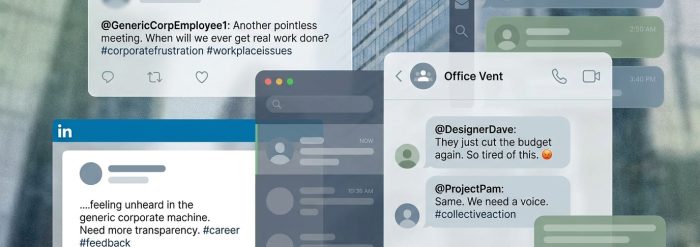
On social media, protected concerted activity may include employees discussing low pay, comparing wages, complaining together about unsafe equipment, criticizing a schedule change, asking coworkers to support a petition, posting about staffing levels, or discussing a supervisor’s conduct toward the team.
The NLRB’s concerted activity guidance explains that a single employee may also be protected if they are acting on the authority of coworkers, bringing group complaints to the employer, trying to induce group action, or preparing for group action.
This matters because employers often want to discipline the “one employee who posted it.” But if that employee was raising a group complaint, encouraging coworkers to act, or continuing a workplace discussion, the post may be protected.
What Social Media Activity Is Not Protected?
Employees do not have unlimited protection online. The NLRB’s social media guidance explains that activity is not protected if an employee says things about the employer that are egregiously offensive or knowingly and deliberately false, or if the employee publicly disparages the employer’s products or services without relating the complaints to a labor controversy.
That distinction is important.
An employee complaining that “management cut our hours without warning and several of us are struggling” may be protected. An employee posting a knowingly false statement that the company sells unsafe products, when that statement is intentionally false and unrelated to a labor dispute, may not be protected. An employee threatening violence, harassing a coworker, disclosing medical records, or posting customer confidential information may also lose protection or violate other lawful policies.
The practical employer standard is this: before disciplining an employee for a post, identify whether the post concerns wages, schedules, safety, benefits, discipline, management conduct, or other working conditions. If it does, pause and review whether the post is protected concerted activity before acting.
Title VII and Social Media: When Online Conduct Becomes Workplace Harassment
Employers must also consider Title VII and other anti-discrimination laws. Title VII prohibits discrimination and harassment based on race, color, religion, sex, and national origin. Other federal laws prohibit harassment based on age and disability. The EEOC explains that harassment is a form of employment discrimination and may become unlawful when it creates a hostile work environment or results in a tangible employment action.
Social media can become part of a harassment issue if online conduct affects the workplace. For example, if an employee posts racist comments about a coworker, shares sexually explicit content targeting a coworker, mocks a coworker’s disability, attacks an employee’s religion, or participates in online harassment that spills into work, the employer may need to respond.
The fact that the conduct occurred online or after hours does not automatically make it irrelevant. The EEOC’s harassment guidance looks at the entire record, including the nature of the conduct and the context in which it occurred.
For employers, this creates a careful balance. An employer may not be able to discipline an employee simply because they complained online about wages or management. But the employer can and should address social media conduct that violates anti-harassment rules, threatens coworkers, or contributes to a hostile work environment.
The Title VII Exception: Protected Activity Does Not Protect Harassment
This is an important distinction for policy drafting. An employee may have rights under the NLRA to discuss working conditions, but that does not give the employee a free pass to engage in unlawful harassment or discrimination.
For example, employees may complain online about a supervisor’s scheduling practices. They may not use that complaint as an excuse to direct racial slurs, sexual harassment, religious attacks, disability-based insults, or threats at coworkers. The EEOC’s small business harassment fact sheet explains that employers have obligations to prevent and correct harassment in the workplace, including harassment that becomes severe or pervasive enough to create an abusive work environment.
A lawful social media policy should make this clear. Employees may discuss wages and working conditions, but they may not use social media to harass, threaten, intimidate, or discriminate against coworkers, customers, vendors, or others connected to the workplace.
Retaliation Risk: Do Not Punish Employees for Protected Complaints
Social media posts can also involve protected complaints under anti-retaliation laws. If an employee posts that they reported sexual harassment, complained about discrimination, raised wage concerns, or reported unsafe conditions, the employer should be careful before taking adverse action.
The EEOC explains that retaliation occurs when an employer punishes an applicant or employee for asserting rights protected by EEO laws, including filing a complaint, serving as a witness, or opposing discrimination.
This does not mean an employee becomes untouchable after posting online. But it does mean the employer must separate the protected complaint from any separate misconduct. If the employee complained about harassment and also threatened a coworker, the employer may address the threat. But the documentation should be clear that the discipline is for the threat, not for the protected complaint.
Acceptable Social Media Policy Rules
A strong social media policy should be specific. It should tell employees what is prohibited without discouraging legally protected discussions.
Employers may generally prohibit employees from disclosing trade secrets, confidential business information, customer lists, private financial information, protected health information, personnel records, login credentials, internal investigations, and other sensitive company information. Employers may also prohibit employees from speaking on behalf of the company without authorization, using company logos in a misleading way, impersonating the company, or operating company social media accounts without permission.
Employers may prohibit unlawful harassment, threats, bullying directed at coworkers, discrimination, intimidation, and conduct that violates the company’s anti-harassment policy. Employers may prohibit employees from using company devices, work time, or company accounts for unauthorized personal social media use, as long as rules are applied consistently and do not discriminate against protected activity.
Employers may also require employees to make clear that personal opinions are their own when they discuss the company in a way that could reasonably be mistaken for an official company statement. However, disclaimer requirements must be written carefully so they do not burden protected activity.
Unacceptable or Risky Social Media Policy Rules
The riskiest social media policies are usually the ones that ban broad categories of speech without exceptions.
Rules that prohibit “negative comments about the company,” “disparaging remarks,” “embarrassing posts,” “inappropriate discussions about management,” “discussion of compensation,” “sharing internal concerns,” or “posting about workplace issues” can create NLRA problems. The NLRB has warned that overly broad policies may chill employees from exercising protected rights, even if the employer has not enforced the policy.
A policy that says employees may not discuss wages is especially risky. Wage discussions are at the core of protected concerted activity. A policy that says employees may not contact the media about workplace concerns may also be risky if it prohibits employees from acting together to raise workplace issues externally.
Rules requiring employees to obtain company approval before connecting with coworkers online or posting about work-related activities can also be problematic if they interfere with protected organizing or concerted activity. The NLRB’s protected concerted activity examples include cases involving overly broad social media policies restricting discussions about terms and conditions of employment.
The Difference Between “Confidential Information” and Protected Workplace Discussion
Employers have a legitimate right to protect confidential information. But a policy cannot define “confidential” so broadly that it includes wages, schedules, staffing levels, discipline, workplace complaints, or working conditions.
A lawful confidentiality rule might prohibit disclosure of customer financial records, medical information, trade secrets, proprietary pricing strategy, nonpublic business plans, passwords, personnel files, and legally protected private information.
A risky confidentiality rule might prohibit employees from discussing “anything related to the company,” “employee information,” “internal matters,” or “workplace issues.” Those phrases may be broad enough to chill protected discussions.
The policy should clarify that nothing in the policy is intended to restrict employees from discussing wages, hours, or other terms and conditions of employment, or from engaging in rights protected by applicable law.
Social Media and Wage Discussions
Employees generally have the right to discuss wages, including on social media. Employers should not discipline employees simply because they posted about pay, asked coworkers what they make, complained that wages are too low, or discussed raises.
The NLRB’s concerted activity guidance specifically identifies talking with one or more coworkers about wages and benefits as protected concerted activity.
This is uncomfortable for many employers, but discomfort is not a legal reason to ban the discussion. If the post includes inaccurate statements, the employer can provide correct information. If the post includes threats or harassment, the employer can address that separate conduct. But the wage discussion itself should not be prohibited.
Social Media and Customer Complaints
Customer-facing businesses often worry about employees posting negative comments about customers, clients, patients, or vendors. Employers can have rules requiring professionalism and confidentiality, especially when employees handle private customer information.
However, the policy should distinguish between protected workplace complaints and improper disclosure or harassment.
For example, an employee posting, “We are short-staffed every Saturday and customers are yelling at us because management will not schedule enough people” may be discussing working conditions. An employee posting a customer’s private information, medical details, payment information, or insulting comments about a specific customer may violate lawful company policy.
For healthcare, behavioral health, legal services, financial services, and similar industries, confidentiality concerns are even more serious. Employers in those fields should have stricter rules on client, patient, and customer information, while still preserving employees’ rights to discuss their own working conditions.
Social Media and Company Reputation
Employers naturally want to protect the company’s reputation. But reputation protection cannot be written so broadly that employees are prohibited from criticizing working conditions.
A policy may prohibit employees from falsely claiming to speak for the company, using company branding without authorization, revealing confidential information, making threats, engaging in unlawful harassment, or knowingly publishing maliciously false statements.
A policy should not simply say, “Employees may not damage the company’s reputation.” That phrase can be read to prohibit protected complaints about wages, safety, staffing, or management.
The better approach is to identify the specific conduct that harms the business in a legally defensible way.
Social Media and Off-Duty Conduct
Employees do not have unlimited privacy rights in public social media activity, but employers should be cautious about disciplining off-duty posts. The key questions are whether the post affects the workplace, violates a lawful policy, involves protected activity, or creates a legitimate business concern.
For example, an off-duty post containing threats toward coworkers, discriminatory harassment, disclosure of confidential company information, or impersonation of the company may justify employer action. A post complaining about low pay or asking coworkers to organize around schedule changes may be protected.
Employers should avoid selective enforcement. If the company disciplines one employee for off-duty political or social commentary but ignores similar conduct by others, the inconsistency can create discrimination or retaliation concerns.
Social Media and Political or Religious Posts
Political and religious posts are sensitive. Private employers in Texas may have more flexibility than public employers, but Title VII protects employees from discrimination based on religion and requires reasonable accommodation of sincerely held religious beliefs unless doing so creates undue hardship. Employers should not discipline religious expression merely because it is unpopular or because coworkers dislike it.
At the same time, religious or political expression can cross the line if it becomes harassment, threats, discrimination, or disruption of business operations. The EEOC’s religious discrimination guidance explains that Title VII requires employers not to discriminate based on religion and to reasonably accommodate religious observances, practices, and beliefs unless accommodation would pose undue hardship.
The practical employer approach is to focus on conduct, not viewpoint. Do not discipline an employee simply because the employer dislikes the political or religious opinion. Review whether the post violates a neutral policy, targets coworkers, creates harassment, discloses confidential information, or affects legitimate business operations.
Social Media and Workplace Investigations
Employees may post about ongoing workplace investigations, harassment complaints, disciplinary matters, or internal disputes. Employers may want to prohibit all discussion of investigations, but blanket confidentiality rules can be risky.
Employers can require confidentiality when there is a legitimate business reason, such as protecting witnesses, preventing evidence destruction, protecting privacy, avoiding intimidation, or preserving the integrity of the investigation. But the rule should be limited and explained.
A blanket policy stating that employees may never discuss any investigation or complaint may interfere with protected rights. Employees may have the right to discuss workplace complaints, discipline, harassment, or working conditions with coworkers or government agencies.
The safer policy is to state that employees may not retaliate, threaten, intimidate witnesses, disclose confidential personal information, or interfere with an investigation, while also preserving legally protected rights.
Social Media and Company Devices
Employers may usually regulate use of company-owned devices, company email, company phones, company accounts, and company internet systems. The NLRB’s employer rights guidance recognizes that employers may restrict employee use of workplace communication media they own, such as bulletin boards, telephones, and digital devices, if they do not discriminate against union-related or other protected communications.
That last part matters. If an employer allows employees to use company communication tools for personal announcements, community events, or workplace discussions, but prohibits union or protected workplace discussions, the employer may create risk.
A good policy should state when company systems may be used, whether personal use is allowed, and that rules will be applied consistently and without unlawful discrimination against protected activity.
Social Media and Company Accounts
Company social media accounts should be tightly controlled. Employers should identify who may post, who approves content, who has passwords, who responds to messages, who handles negative comments, and what happens when an employee with account access leaves the company.
Employees should not use company accounts for personal opinions, political statements, religious messages, jokes, arguments, customer disputes, or unauthorized employment commentary. The employer should also maintain administrative control over accounts so a departing employee cannot lock the company out.
This part of the policy is usually low-risk because it governs official company speech and company property, not employee discussion of working conditions on personal accounts.
What About Employees Identifying Themselves as Company Employees?
Employers may ask employees not to imply they are speaking on behalf of the company unless authorized. Employers may also require employees to be clear that their views are personal when confusion is likely.
However, employers should be careful not to prohibit employees from identifying their employer when discussing working conditions. Employees often need to identify the employer to discuss wages, safety, scheduling, or other terms and conditions of employment meaningfully.
A balanced rule might say employees may identify their employer on personal social media, but they may not claim or imply that they are speaking on behalf of the company unless authorized.
Can Employers Require Employees to Take Down Posts?
Sometimes. If the post discloses confidential information, uses company branding without authorization, contains threats, violates anti-harassment rules, impersonates the company, or includes unlawful conduct, the employer may have grounds to require removal or take disciplinary action.
But if the post involves protected concerted activity, demanding removal may create legal risk. For example, telling employees to delete a post about wages, unsafe conditions, or group complaints may be viewed as interference with protected rights.
Before demanding removal, employers should identify the exact policy violation and legal basis. “We do not like the post” is not enough.
Can Employers Discipline Employees for Social Media Posts?
Yes, but only after careful review. Employers may discipline employees for social media conduct that violates lawful policies and is not protected by law. This may include threats, harassment, discrimination, disclosure of confidential information, misuse of company accounts, maliciously false statements, or conduct that materially harms the workplace for lawful reasons.
However, employers should not discipline employees for protected concerted activity, wage discussions, group complaints, union support, protected discrimination complaints, safety reports, or other protected activity.
A smart employer should review five questions before discipline:
- What exactly did the employee post?
- Does the post involve wages, hours, scheduling, safety, staffing, discipline, management, benefits, or other working conditions?
- Were coworkers involved, tagged, commenting, or being asked to act?
- Does the post include threats, harassment, confidential information, malicious falsehoods, or other unprotected misconduct?
- Have similar situations been handled consistently?
If the answer is unclear, pause before disciplining.
Examples of Posts That May Be Protected
An employee posts: “We are all being scheduled six days a week with no notice. This is unfair, and we need to talk to management together.”
That may be protected because it involves scheduling and group action.
An employee posts in a private coworker group: “Did anyone else not get overtime on their check? I think payroll is wrong.”
That may be protected because it involves wages and coworkers.
An employee posts: “The AC is broken in the warehouse again. It is dangerous in there, and management is ignoring us.”
That may be protected because it involves safety and working conditions.
An employee posts: “We should all ask for a raise because the workload doubled.”
That may be protected because it involves wages and collective action.
Examples of Posts That May Justify Discipline
An employee posts a patient’s medical information, a client’s legal matter, a customer’s credit card information, or an employee’s private personnel document.
That may justify discipline because it involves confidential or legally protected information.
An employee posts a racial slur directed at a coworker or sexually harassing comments about a subordinate.
That may justify discipline because it may violate anti-harassment rules.
An employee posts a threat of violence toward a manager or coworker.
That may justify discipline because threats are not protected.
An employee logs into the company’s official Facebook page and posts personal opinions without authorization.
That may justify discipline because it misuses company property and official communication channels.
An employee knowingly fabricates a false statement about the company’s products or services unrelated to any labor dispute.
That may justify discipline depending on the facts.
What Should a Good Social Media Policy Include?
A strong social media policy should include several key sections.
It should define personal social media and official company social media. It should identify who may post on behalf of the company. It should prohibit unauthorized disclosure of confidential information. It should prohibit harassment, discrimination, threats, and retaliation. It should restrict misuse of company logos, trademarks, photos, accounts, and systems. It should explain expectations for company devices and work time. It should warn employees not to represent personal opinions as company statements.
Most importantly, it should include a protected rights disclaimer. That disclaimer should make clear that nothing in the policy is intended to restrict employees from discussing wages, hours, benefits, schedules, safety, workplace concerns, or other terms and conditions of employment, or from exercising rights under applicable law.
What Should Employers Avoid in Social Media Policies?
Avoid broad bans on “negative,” “inappropriate,” “unprofessional,” “disparaging,” “embarrassing,” or “critical” comments unless those terms are carefully tied to specific unprotected conduct. Avoid rules requiring employees to get permission before discussing workplace concerns. Avoid prohibiting employees from discussing wages or working conditions. Avoid blanket bans on contacting media, government agencies, or coworkers. Avoid requiring employees to report coworker posts that involve protected activity.
Also avoid policies that say employees can be disciplined for any post that “reflects poorly on the company.” That kind of language may sound useful, but it is too broad unless narrowed.
A good policy is not about controlling every employee opinion. It is about protecting legitimate business interests while respecting legal rights.
A Practical Employer Framework: The CLEAR Test
Before disciplining an employee for a social media post, use the CLEAR Test.
Content
What did the post actually say? Do not rely on rumors or screenshots without context. Review the full post, comments, date, audience, and related conversations.
Labor Rights
Does the post involve wages, schedules, safety, benefits, discipline, staffing, management, union activity, or group complaints? If yes, NLRA review is needed.
Equal Employment Issues
Does the post involve harassment, discrimination, threats, retaliation, protected complaints, religious expression, disability, race, sex, national origin, age, or another protected category? If yes, Title VII, ADA, ADEA, or retaliation review may be needed.
Actual Policy Violation
What specific lawful policy did the employee violate? If the answer is only “the post was negative,” that is not enough.
Respond Consistency
Have similar posts been handled the same way? Inconsistent enforcement can create discrimination, retaliation, or NLRA risk.
Texas Employer Best Practices
Texas employers should review social media policies at least annually. Laws and NLRB standards can shift, and old handbook language can become risky. Employers should train managers not to react emotionally to posts, not to demand immediate deletion without review, and not to discipline employees for wage or working-condition discussions.
Employers should also separate reputation concerns from legal concerns. A post may be embarrassing but protected. Another post may be embarrassing and unprotected. The difference matters.
When in doubt, employers should document the post, preserve evidence, review the policy, evaluate protected activity, and consult HR or legal counsel before acting.
The Bottom Line for Texas Employers
Employers can and should have social media policies. But those policies must be written carefully. A lawful policy can protect confidential information, prohibit harassment, control company accounts, restrict misuse of company systems, and set expectations for employees who communicate publicly.
What the policy cannot do is silence employees from discussing wages, schedules, safety, working conditions, union activity, discrimination complaints, or other legally protected activity.
The strongest social media policies are not the broadest. They are the clearest. They identify specific prohibited conduct, preserve employee rights, train managers, and give the company a defensible process before discipline is issued.
How The Texas HR Experts at Unit Consulting Can Help
At The Unit Consulting, we help Texas employers create social media policies that protect the business without overstepping employee rights. Social media issues often involve more than reputation concerns. They can involve protected concerted activity, union rights, harassment, discrimination, retaliation, confidentiality, customer privacy, and manager discipline decisions.
We can help your business review handbook language, update social media policies, train managers, investigate online misconduct, and determine when social media activity is protected versus when discipline may be appropriate.