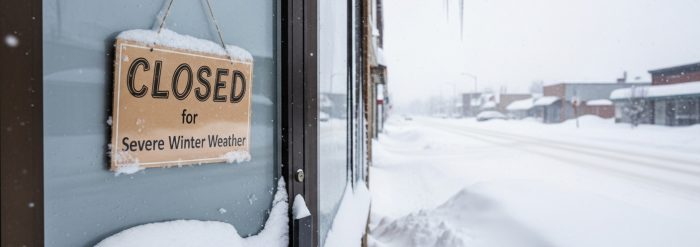
Severe Winter Weather: What Texas Employers Must Know When a Freeze Shuts Down Work

January 26, 2026
Quick Article Summary
- Employers may change schedules or close operations due to dangerous weather, but pay obligations depend on exempt vs non‑exempt status and whether work is performed.
- If hourly workers cannot safely get to work because of weather, you do not have to pay them for time not worked unless your policy or contract says otherwise.
- Salaried (exempt) employees generally must be paid their full salary for any week in which they perform any work, but you may deduct from PTO if properly authorized.
- Employers are responsible for employee safety and should avoid requiring employees to travel in hazardous conditions.
Why This Matters for Texas Employers Right Now
Severe winter weather — including freezing temperatures, ice, and dangerous roads — often disrupts normal business operations. Employers face pressing questions, such as:
- Do I have to pay employees if I close due to the freeze?
- Can I deduct pay or require PTO?
- What about employee safety when roads are dangerous?
- How do I communicate policies and avoid legal claims?
Employees and employers alike will be searching for answers — and your business can provide them while demonstrating expertise and compliance.
Employers Can Close or Delay Business for Safety
Under both OSHA and general Texas employment practice, employers must provide a safe workplace and should not require employees to travel in hazardous conditions. The U.S. Occupational Safety and Health Administration emphasizes that employers have a duty under the General Duty Clause to provide a workplace free from recognized hazards — including those caused by extreme weather. Requiring employees to risk unsafe travel can expose a business to liability.
You can close, delay opening, or ask employees to work remotely if conditions allow.
Paying Hourly (Non‑Exempt) Employees
When You Close for Weather
If you close the business because of weather and the employee does not work, you generally do not owe pay for hours not worked.
Under the Fair Labor Standards Act (FLSA), employers are only required to pay non‑exempt employees for actual hours worked. If the employee is sent home or told not to report, you aren’t obligated to pay for that downtime unless your company policy, contract, or past practice creates a promise of paid closure time.
When Employees Arrive and Then Are Sent Home
If a non‑exempt employee reports for work and the business closes while they are on the clock, you must pay for that time worked. For example, if they work 2 hours before the closure, you must pay those 2 hours.
Can You Require Use of PTO?
You can require an employee to use accrued PTO for the hours or day missed due to bad weather ONLY IF your PTO policy allows it and the employee has accrued hours available. Your PTO policy should be clear on:
- How PTO is charged (half‑day, full day, hourly)
- Whether PTO is required for weather closures
- Whether employees are automatically required to use PTO
Unless the policy clearly allows it, you cannot unilaterally deduct from an employee’s PTO.
Paying Salaried (Exempt) Employees
Salary Basis Under FLSA
Exempt employees (salaried) are paid a fixed salary that generally must be paid for any week in which they perform any work (even just a few minutes), according to the FLSA salary‑basis requirement.
This means:
- If an exempt employee works any portion of the week (checking email from home due to weather, for example), you generally must pay full salary for that week.
- You may deduct from accrued PTO only if your written policy authorizes it and the PTO covers the absence (e.g., using vacation time for a weather closure).
If the employee does no work at all in the week (due to closure), some employers choose to require a PTO deduction, but that must be authorized in your PTO policy.
For more on exempt salary rules, see the FLSA section on salary basis.
What About Remote Work or Work From Home?
If weather allows remote connectivity (phone, email, remote work systems), and you assign work, pay expectations depend on classification:
- Non‑exempt employees: Must be paid for all time worked, including remote work. You should track hours worked remotely.
- Exempt employees: Must be paid full weekly salary if they perform any work, remote or otherwise, in accordance with FLSA salary rules.
Safety First: Don’t Ask Employees to Risk Travel
Under OSHA’s General Duty Clause, employers have responsibility to protect workers from recognized hazards. Dangerous road conditions, black ice, or below‑freezing temperatures create a recognized hazard.
Instead of requiring attendance, employers should:
- Close or delay operations
- Allow remote work where feasible
- Communicate safety expectations clearly
- Provide updates by text/email or intranet
Failing to do so may expose the business to OSHA complaints or liability if an employee is injured while attempting to travel.
Handling PTO and Weather Closures in Your Policies
Your employee handbook should include:
Weather Closure Policy
- When the company may close due to weather
- Whether employees are expected to work remotely
- Which classifications receive pay for closures
Example language:
“When the Company closes due to weather or hazardous conditions, hourly employees will be paid for time worked only. Exempt employees will be paid their full salary if any work is performed during the week. Employees may use PTO for weather closures where available and consistent with this policy.”
PTO Usage Policy
- Whether PTO may be required for weather closures
- How PTO is charged (per hour or per half‑day)
- Whether advances or borrow‑ups are permitted
Communication Standards
Spell out how closure decisions will be communicated (e.g., by 6:00 AM via text and email).
Managing Attendance and Risk
Employers should avoid ambiguous instructions like “report if you can safely get here.”
Instead, effective language includes:
- “Do not report if road conditions are official hazards.”
- “Report only if travel can be done without significant risk and local authorities have not issued travel advisories.”
Texas employers must weigh both operational needs and employee safety — and document decisions made to protect safety.
Unemployment Claims After Weather Closures
Employees who are out of work due to a weather closure may apply for unemployment benefits in some cases. You may need to respond to a Texas Workforce Commission (TWC) claim by explaining the reason for the closure and whether the employee was offered alternative work or paid PTO.
When responding to a TWC claim, be prepared to:
- Provide your weather closure pay policy
- Explain whether the employee was paid PTO
- Describe remote work expectations (if applicable)
Consistent documentation helps when disputing claims under “misconduct connected to the work” or attendance rules. Reference TWC’s guidance on unemployment claims for weather-related layoffs or closures.
Common Employer Questions (and Answers)
Q: Do I have to pay employees when I close due to weather?
A: For hourly workers, only for hours worked. For exempt employees, salary is owed if any work is performed during the week. PTO may be used only if authorized.
Q: Can I force employees to use PTO for weather closures?
A: Yes — but only if the written policy clearly allows it.
Q: Can I tell employees they have to come in if “it’s safe”?
A: No — “safe” is subjective. Define in policy what constitutes an excused absence or allowable remote work.
Q: Do I need to track remote hours?
A: Yes, for non‑exempt employees you must track all hours worked, even remotely.
Why This Article Matters for Texas Employers
As extreme weather events continue to impact Texas, business owners will be searching for answers. This article provides clear, practical, and legally sound guidance that will:
- Help Texas employers avoid costly wage claims
- Improve internal policies for weather closures
- Keep employees safe and operations compliant
- Position your business as an authority on HR compliance during emergencies
How The Texas HR Experts at The Unit Consulting Can Help
Weather closings, pay obligations, PTO requirements, and risk assessments are complicated — and getting them wrong can cost your business money and legal exposure.
At The Unit Consulting, we are the premier HR outsourcing firm in Texas and we help Texas employers:
- Draft compliant weather closure and PTO policies
- Update employee handbooks with clear definitions
- Train managers on attendance, safety, and pay compliance
- Respond to Texas Workforce Commission claims related to closures
Contact us today to get expert HR support that protects your business, your people, and your bottom line.